Start with a conversation you want to have
Imagine a small success: ordering coffee on a trip, understanding a friend's joke or comfortably talking about your day. That is why we learn languages. The aim is more than knowing an increasing number of words. It is being able to say something that matters and understand another person.
Instead of a broad goal such as “learn English”, choose something specific for the coming week: introduce yourself, ask for directions or write a short message. Pick vocabulary that serves that goal. When a few new phrases help in a real situation, progress becomes visible and the next session has a purpose. The satisfaction of being understood can be a powerful invitation to keep learning.
Familiar practices, a better understanding of memory
Repetition, storytelling and conversation have a long tradition. Research helps us ask more precisely when and how to use them. Cognitive psychology highlights retrieval practice and learning spread over time. [3] Brain researchers also describe the role of sleep in consolidating memory. [5]
This does not establish one perfect method for everyone or guarantee fluency in a month. It does suggest a useful rhythm: understand something new, try to recall it yourself, check your answer and revisit it later. A tool should make that rhythm easier. Learning need not become an endless search through apps, settings and rewards.
Recall the answer before revealing it
Looking at a familiar word creates a pleasant sense of recognition. In conversation, however, you need to retrieve it without an answer on the screen. In a study of foreign vocabulary, repeated retrieval improved later recall. [2]
Use flashcards actively. Pause briefly, try to say the answer and then reveal it. If you make a mistake, check the meaning and pronunciation before saying the correct version. An error tells you what needs more practice. You do not need to struggle with every card for a long time: an honest attempt followed by prompt feedback is a better starting point than endless guessing.
Revisit material after a break
Cepeda and colleagues’ review supports spacing practice. Suitable intervals also depend on how long you intend to remember the material. [1]
As a starting point, revisit a small set the next day, a few days later and after a week. This is an example schedule, not a universal algorithm. If you forget something, return to it sooner. If it comes easily, leave a longer gap. In MemoHello, use Continue and revisit difficult cards. Viewing a flashcard by itself does not mean you have mastered the word permanently.
Learn words and phrases in context
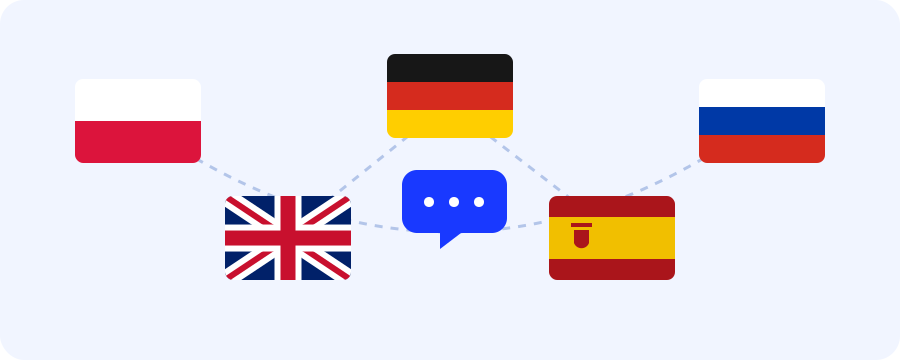
Words help you build vocabulary. Phrases show how to use it in a situation. Knowing “coffee” is useful; when travelling, you may also need “I'd like a coffee” and “Can I pay by card?”. An example sentence shows word order, common combinations and the tone of an expression.
Keep articles and important grammatical forms together with a word. Once you know an example, change one detail: the drink, place or person. Say the new sentence aloud. Do not treat a translation as the only possible equivalent in every situation. Also ask who is speaking, to whom and with what intention. This small step helps you move from a ready-made flashcard to something you can say yourself.
Listen, speak, read and write
Flashcards are a useful part of learning, but conversation requires more. Paul Nation describes balanced language learning as combining understanding, producing language, deliberate language study and developing fluency. [6]
Alongside review, include a short dialogue, a simple text and a few sentences of your own. Choose material you understand well enough to follow its meaning. After listening, try to explain it in simpler words. You could record a short response or talk to someone who can help you improve it. Practise asking for clarification too: good communication includes knowing how to say that you have not understood something yet.
Make room for clear, calm attention
The screen should make it clear what you are learning and what to do next. Stothart and colleagues found that phone notifications could disrupt an attention-demanding task even when participants did not check their devices. [4]
A practical takeaway for a language session is to silence notifications, keep one card or text open and choose a small amount of material. Clear content, comfortable text and the chance to focus on one task matter more than lots of decoration. If you use audio, listen deliberately. Then try repeating the expression yourself, rather than simply letting a recording play in the background.
What can we learn from polyglots?
There is no single number of minutes or daily schedule shared by all polyglots. In her TED talk, Lýdia Machová emphasises finding enjoyment in learning. This is a practitioner's experience, rather than a study comparing the effectiveness of methods. [7]
You could start with 10–20 minutes a day and add contact with the language that you enjoy: a song, a short conversation or part of a book. That time is an organisational suggestion, not a scientifically established threshold. What matters is what you do during it and whether you can return to the routine. Instead of copying someone's impressive timetable, choose one that also fits an ordinary busy day.
Consistency without the pressure to be perfect
Choose a small anchor: a few cards after breakfast or before an evening cup of tea. Plan both new material and a return to familiar things. After missing a day, come back to a manageable amount; you do not have to catch up with everything at once. Your pace should leave room for rest.
Each week, check what you can say without prompts. Can you tell a short story, understand an answer to your question or use a familiar phrase in a new sentence? Viewed-card counts help track activity, but they do not replace these checks. Write down one small success and one thing to practise. That gives your next session a concrete purpose.
A calm 15-minute session to try
- 3 minutes: recall a few familiar words or phrases without revealing the answers immediately.
- 4 minutes: learn a small amount of new material and explore its examples.
- 3 minutes: listen to expressions, repeat them and change one detail.
- 4 minutes: read a short dialogue or explain something in your own words.
- 1 minute: choose what you will revisit next time.
This is a starting point. Shorten the session, change the proportions or spend more time talking. Finish knowing what you can do tomorrow. You do not need a burst of heroic effort to take a worthwhile step today.
Questions that often come up at the beginning
How long does learning a language take?
It depends on your goal, starting point, language and quality of practice. A few daily minutes can begin a habit; comfortable communication generally requires longer work. First identify a situation you want to handle, rather than searching for one date when a language will be “finished”.
Are flashcards enough on their own?
They help you practise vocabulary and phrases. Add listening, reading, creating your own sentences and conversation. Revealing a correct answer on a card is not yet the same as using it in spontaneous speech.
Should I choose words or phrases?
Choose words to expand your vocabulary, and phrases when you need complete expressions for specific situations. You can combine both modes. Below, choose a language pair and level, then begin a short session. The best next step is one you will actually take.