 EN · C2
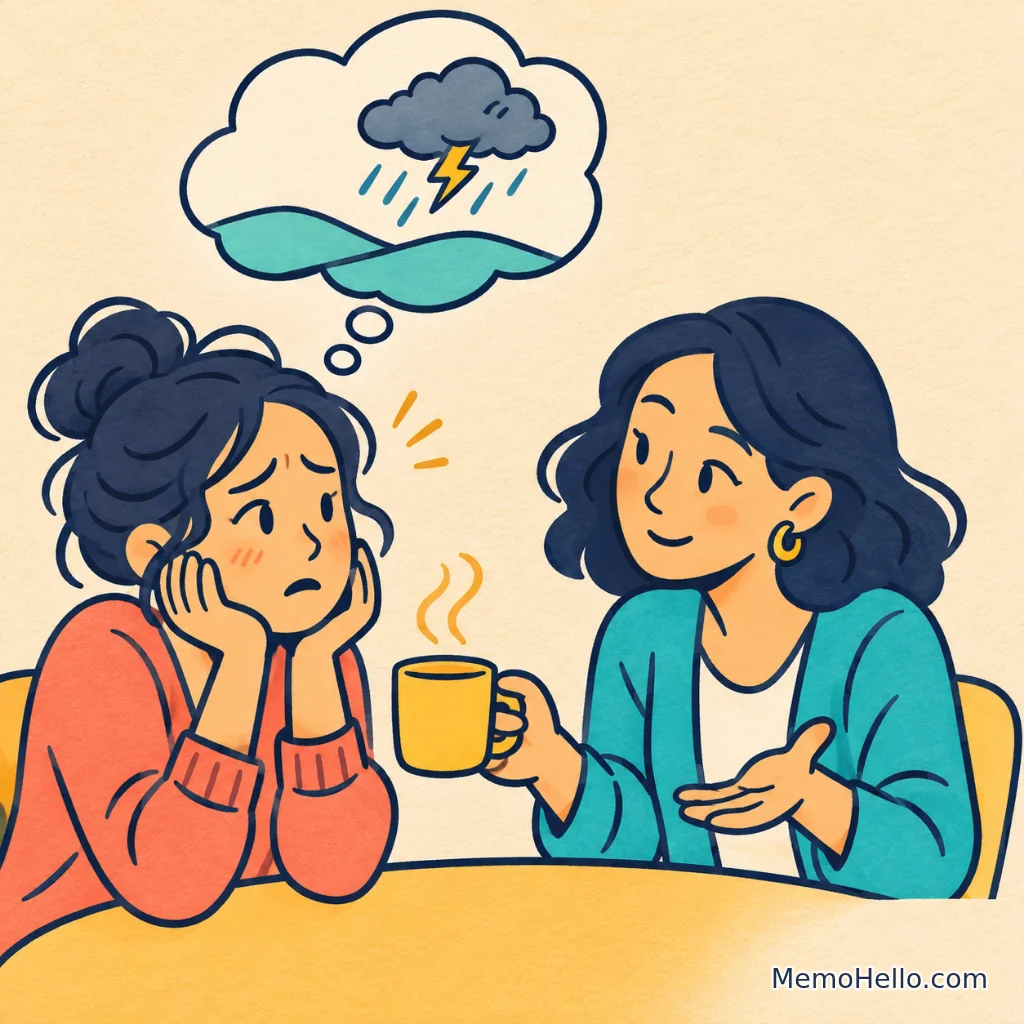
Acknowledging someone's fear does not require treating every concern as probable; it requires taking the experience itself seriously.
Learn a useful phrase in context, listen to its pronunciation and practise saying it.
No voice for this language is installed. Speech practice is still available.Uznanie czyjegoś lęku nie wymaga potwierdzania każdej obawy jako prawdopodobnej; wymaga potraktowania poważnie samego doświadczenia.
No voice for this language is installed. Speech practice is still available. Uznanie czyjegoś lęku nie wymaga potwierdzania każdej obawy jako prawdopodobnej; wymaga potraktowania poważnie samego doświadczenia.
Voice analyzer
Listen, repeat and see which words were recognized as expected.
Acknowledging someone's fear does not require treating every concern as probable; it requires taking the experience itself seriously.
Ready for your attempt
Start speaking — your text will appear here.
This preview may change. The score appears after the attempt ends.Checking recognition support…
Scores are saved only on this device. Audio is not stored.
Recognition may use the browser provider's servers and require internet. We use the default microphone.
This is agreement with recognized text. Missing words can be recognition errors; the score does not assess individual speech sounds.
How is the score calculated?
Exact words get full credit; similar words get partial credit. Missing, replaced and extra words lower the score. Excellent requires all words in the right order. The 60/80% thresholds are experimental.
Dialogues in context
EN · C2- A
Does acknowledging fear confirm every concern?
Uznając lęk, potwierdzamy wszystkie obawy?
- B
Acknowledging someone's fear does not require treating every concern as probable; it requires taking the experience itself seriously.
Uznanie czyjegoś lęku nie wymaga potwierdzania każdej obawy jako prawdopodobnej; wymaga potraktowania poważnie samego doświadczenia.
- A
How shall we proceed, then?
Jak więc postąpimy?
- B
Let’s listen to the experience without hasty assurances.
Wysłuchajmy doświadczenia bez pochopnych zapewnień.
No voice for this language is installed. Speech practice is still available.
- A
How can we discuss needs without hasty assumptions?
Jak rozmawiać o potrzebach bez pochopnych założeń?
- B
Acknowledging someone's fear does not require treating every concern as probable; it requires taking the experience itself seriously.
Uznanie czyjegoś lęku nie wymaga potwierdzania każdej obawy jako prawdopodobnej; wymaga potraktowania poważnie samego doświadczenia.
- A
How can we put that observation into practice?
Jak możemy zastosować tę uwagę w praktyce?
- B
Let’s agree on one concrete step and check its effects before making further decisions.
Ustalmy jeden konkretny krok i sprawdźmy jego skutki, zanim podejmiemy dalsze decyzje.
No voice for this language is installed. Speech practice is still available.
Translations
 German
 Spanish
 Russian
Examples of use
Precyzyjne rozróżnienie empatii i oceny prawdopodobieństwa.
No voice for this language is installed. Speech practice is still available.Precisely distinguishing empathy from probability assessment.
No voice for this language is installed. Speech practice is still available.Empathie und Wahrscheinlichkeitseinschätzung präzise unterscheiden.
No voice for this language is installed. Speech practice is still available.Distinguir con precisión la empatía de la evaluación de probabilidades.
No voice for this language is installed. Speech practice is still available.Точное различение сочувствия и оценки вероятности.
No voice for this language is installed. Speech practice is still available.Related phrases
Nie oczekuję, że podzielisz mój wybór, ale chciałbym, byś uznał moje prawo do niego.
C2No voice for this language is installed. Speech practice is still available.Twoja troska wiele dla mnie znaczy, choć sposób jej wyrażania bywa przytłaczający.
C2No voice for this language is installed. Speech practice is still available.Deklarowana jednomyślność nie wyklucza obaw, których nikt nie ujawnił, ponieważ rozmowa nie stwarzała przestrzeni do sprzeciwu.
C2No voice for this language is installed. Speech practice is still available.Nie zaprzeczam, że ten gest był życzliwy; pytam, czy uprawniał do podjęcia decyzji w moim imieniu.
C2No voice for this language is installed. Speech practice is still available.Obawiam się, że przeprosiny tracą sens, jeśli zaraz potem wyjaśniasz, dlaczego to ja powinienem był postąpić inaczej.
C2No voice for this language is installed. Speech practice is still available.Chętnie podtrzymam nasz zwyczaj, jeśli pozostawimy sobie możliwość odmiennego udziału bez konieczności tłumaczenia się z każdej zmiany.
C2No voice for this language is installed. Speech practice is still available.Related vocabulary
doświadczenie
A2No voice for this language is installed. Speech practice is still available.przekazywać osobistą perspektywę
B2No voice for this language is installed. Speech practice is still available.numer telefonu
A1No voice for this language is installed. Speech practice is still available.